
Why Chemical Free Flea and Tick Control for Dogs Is Worth Taking Seriously
Chemical free flea and tick control for dogs works — and here’s a quick overview of your best options:
| Method | How It Works | Reapply How Often |
|---|---|---|
| Essential oil sprays (cedarwood, rosemary, lemongrass) | Repels pests on contact | Every 1-3 days |
| Herbal spot-ons | Monthly topical repellent | Once a month |
| Natural collars | Continuous low-level repellency | Every 1-3 months |
| Diatomaceous earth | Physically damages flea exoskeletons | Weekly (environment) |
| Flea & tick shampoos | Kills adults on contact during bath | Every 1-3 weeks |
| Yard + home treatment | Eliminates 95% of flea population in environment | Every 7-10 days |
Every dog owner dreads the moment they find a tick buried in their dog’s coat — or watch their pup scratch frantically for days on end.
The instinct is to reach for the strongest product available. But that’s where it gets complicated.
Many conventional flea and tick products — including popular oral medications and flea collars — have been linked to serious health problems. The FDA has issued warnings about neurological side effects including tremors, seizures, and loss of coordination from isoxazoline-based products like Bravecto, Nexgard, Simparica, and Credelio. Meanwhile, certain flea collars contain organophosphate pesticides that have been linked to learning disabilities in children.
For eco-conscious pet owners, this creates a real dilemma: protect your dog from pests, or protect them from the treatment itself?
The good news is that a growing number of plant-based, chemical-free options are proving genuinely effective — from essential oil sprays with thousands of verified reviews to vet-formulated herbal spot-ons. The key is knowing how to use them correctly, and how to combine them into a strategy that actually works year-round.
This guide breaks it all down.
The Hidden Risks of Conventional Flea and Tick Treatments
When we look at the back of a traditional flea medication box, we often see a long list of chemical ingredients that look like they belong in a laboratory, not on our best friends. The most concerning class of these chemicals is known as isoxazolines. This group includes active ingredients like fluralaner and afoxolaner, found in popular oral chews.
As of April 2026, the data remains clear: the FDA continues to warn pet owners about potential neurological events associated with these drugs. We have seen reports of dogs experiencing muscle tremors, ataxia (a lack of coordination that makes a dog look “drunk”), and even full-blown seizures. These drugs work systemically, meaning they circulate in your dog’s bloodstream for months at a time. While they are designed to paralyze the nervous system of a flea, the “glitch” is that they can sometimes impact the dog’s nervous system too.
It isn’t just the oral pills causing concern. Many conventional flea collars utilize tetrachlorvinphos (TCVP), an organophosphate. Research has linked this specific pesticide to learning disabilities in children who pet their dogs and then touch their own faces. Furthermore, EPA investigations have highlighted that small dogs, specifically those between 10 and 20 pounds, are significantly more vulnerable to adverse reactions from topical “spot-on” chemicals, often suffering from skin rashes, vomiting, and lethargy.
For those of us at Digital Casf, the “systemic toxicity” of these products is the biggest red flag. If a product has to poison a dog’s blood to kill a bug, we have to ask: what is it doing to the dog’s liver and kidneys over a lifetime of use?
How Chemical Free Flea and Tick Control for Dogs Works
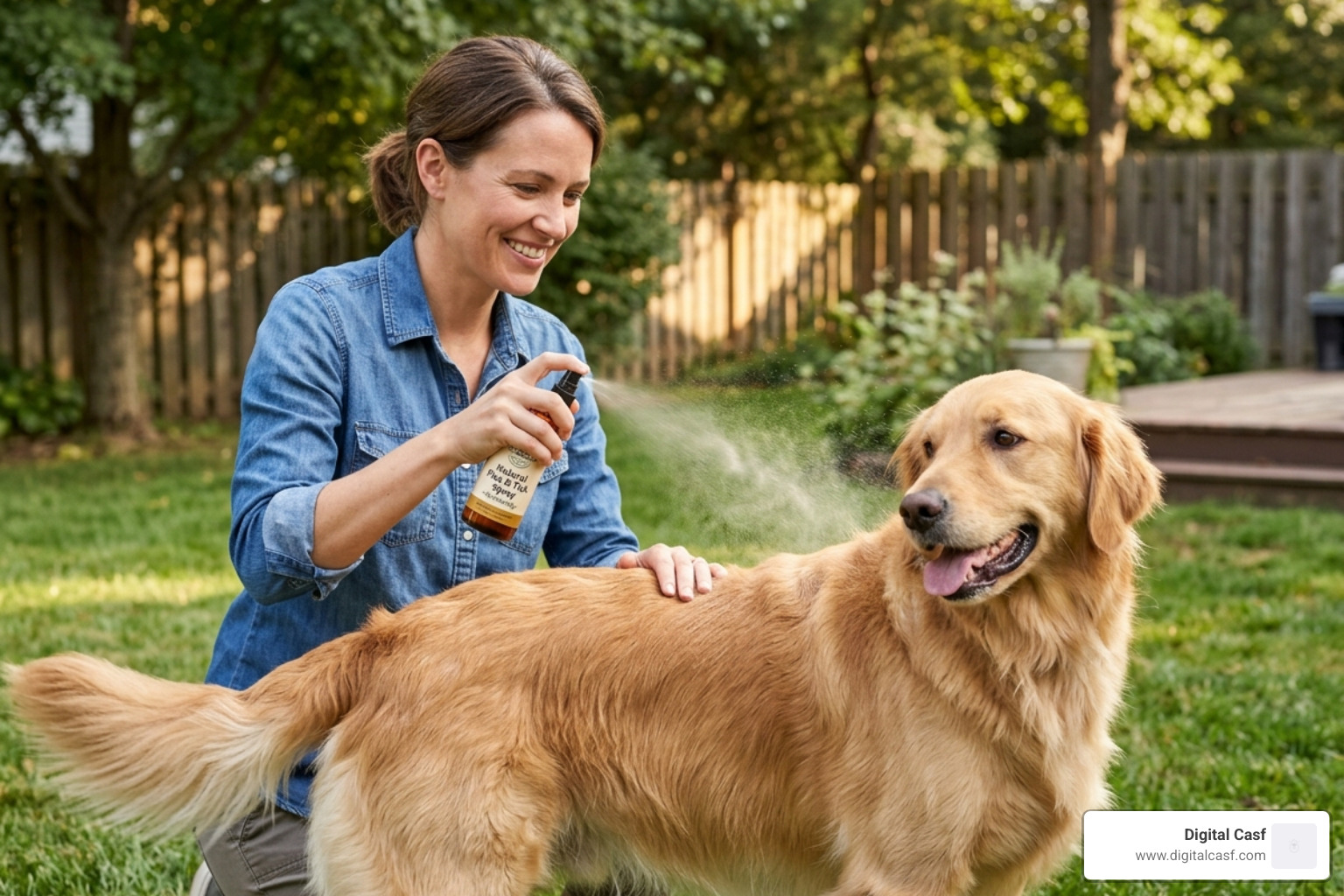
You might wonder, “If there’s no poison, how does it actually kill the bugs?” Natural solutions generally rely on two methods: repellency and physical action.
Repellency vs. Toxicity
Most natural products use aromatic plant oils that fleas and ticks find absolutely repulsive. While we might enjoy the scent of cedarwood or peppermint, these scents signal “danger” to a parasite. By making your dog smell like a botanical garden, you essentially turn them into an invisible target for questing ticks.
Physical Action and Exoskeleton Penetration
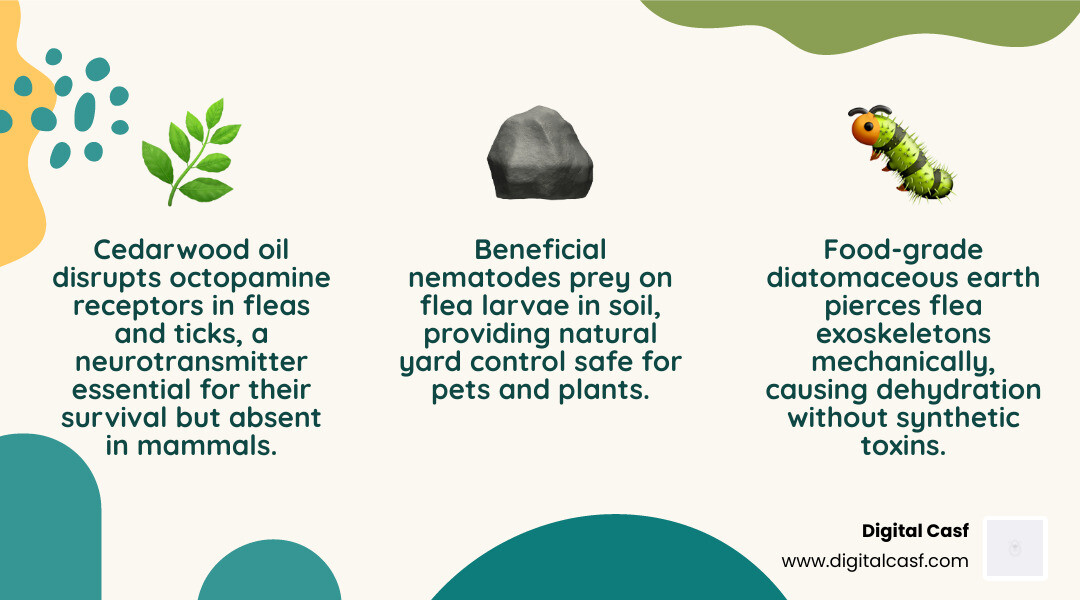
Some chemical free flea and tick control for dogs doesn’t just repel; it eliminates. Ingredients like cedarwood oil can disrupt a pest’s octopamine receptors. Octopamine is a neurotransmitter essential to the life functions of pheromone-driven insects, but—crucially—mammals, bees, and butterflies don’t rely on it. This makes it a “targeted” strike. Other substances, like diatomaceous earth, work mechanically. They are microscopic, sharp particles that pierce the waxy exoskeleton of a flea, causing it to dehydrate and die without the use of a single synthetic toxin.
Breaking the Reproduction Cycle
Natural sprays and shampoos often target the eggs and larvae as well as the adults. By neutralizing the eggs before they hatch, you stop a small flea “hitchhiker” from turning into a full-blown home infestation.
Choosing Chemical Free Flea and Tick Control for Dogs by Ingredient
When shopping for natural protection, look for these heavy hitters on the label:
- Geraniol and Eugenol: Derived from geraniums and cloves, these are powerful repellents often found in natural collars and spot-ons.
- Cedarwood Oil: A staple in natural pest control that kills on contact and disrupts the insect’s ability to breathe.
- Peppermint Oil: Highly effective at repelling a wide range of insects, though it should be used with caution around nursing mothers as it can impact milk production.
- Sodium Lauryl Sulfate: Often derived from coconut oil, this helps the formula stick to and penetrate the pest’s shell.
- Neem and Almond Oil: These serve as “carrier oils” that soothe the skin while providing a base for the repellents.
- Scentless Options: For dogs (or humans) with sensitive noses, some modern formulas use mineral-based physical blockers that offer protection without the heavy herbal scent.
Year-Round Chemical Free Flea and Tick Control for Dogs
In 2026, we are seeing shorter winters and longer “bug seasons” in many regions. This means natural protection isn’t just for the summer.
- Daily: Use a light repellent spray before hikes or visits to the dog park.
- Monthly: Apply a botanical spot-on or check the “charge” on your herbal collar.
- Seasonally: During peak tick months (spring and fall), consider adding a brewer’s yeast or garlic supplement to your dog’s diet to change their skin’s scent profile from the inside out.
Top Natural Ingredients for Pest Prevention
Beyond the bottle, there are several raw ingredients that can bolster your dog’s defenses:
- Diatomaceous Earth (Food Grade): Dust this into carpets or along floorboards to kill fleas in the home environment.
- Brewers Yeast & Garlic: When fed in appropriate, dog-safe doses, these create an odor (undetectable to humans) that fleas hate.
- Beneficial Nematodes: These are microscopic worms you can spray on your yard. They don’t hurt pets or plants, but they eat flea larvae in the soil!
- Apple Cider Vinegar: A 50/50 mix with water makes an excellent, budget-friendly grooming spray that balances the skin’s pH and repels pests.
A Step-by-Step Guide to Applying Natural Treatments
Applying chemical free flea and tick control for dogs requires a bit more “hands-on” effort than just giving a pill, but the safety trade-off is worth it.
- The Patch Test: Before dousing your dog, apply a small amount of the product to their inner thigh. Wait 24 hours to ensure there is no redness or irritation.
- The “Against the Grain” Technique: When spraying, ruffle your dog’s fur backward so the mist reaches the skin. This is where the fleas hide!
- The Massage: After spraying or applying a spot-on, massage the oils into the coat. This ensures even distribution and helps the skin absorb the conditioning elements.
- Face Protection: Never spray directly into a dog’s face. Instead, spray your hands or a cloth and gently wipe around their ears and neck, being careful to avoid the eyes and nose.
- Reapplication: Natural oils evaporate. If your dog goes for a swim or gets caught in a downpour, you must reapply the protection once they are dry.
The Integrated Approach: Home and Yard Maintenance

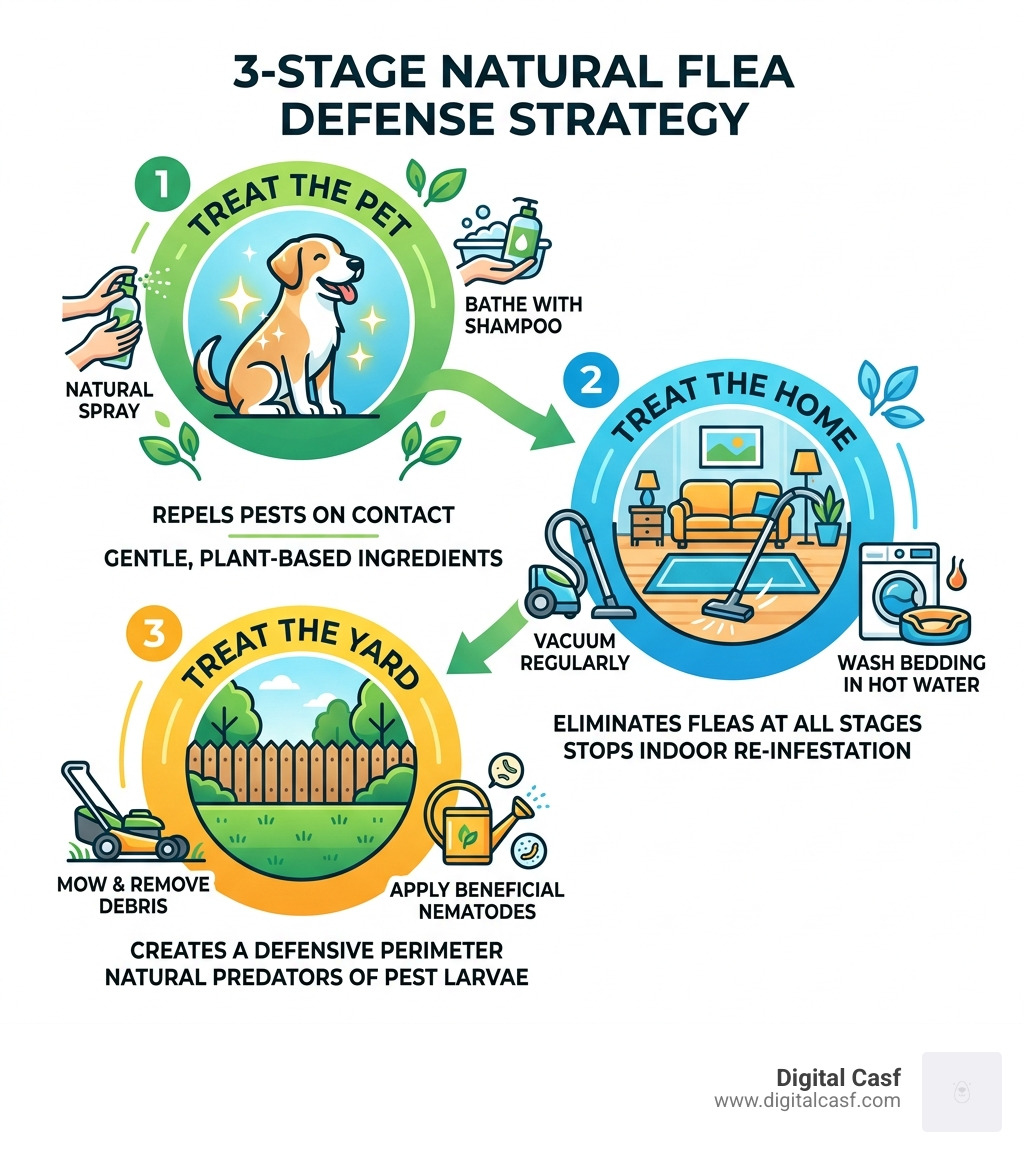
Did you know that only about 5% of a flea infestation is actually on your dog? The other 95% is living in your rugs, your sofa, and your lawn as eggs and larvae.
To truly stop the itch, we must treat the environment:
- Vacuum Daily: During an active breakout, vacuuming picks up eggs and the “flea dirt” (dried blood) that larvae feed on.
- Hot Water Washing: Wash all pet bedding weekly in water at least 140°F (60°C) to kill all life stages of the flea.
- Landscaping: Keep your grass mowed short. Ticks love to climb to the top of tall grass blades to “hitch” a ride on passing mammals.
- Buffer Zones: Use wood chips or gravel to create a 3-foot barrier between wooded areas and your lawn. Ticks are less likely to cross these dry, hot zones.
- Wildlife Deterrents: Keep trash cans sealed and avoid leaving pet food outside. Opossums, raccoons, and stray cats are the “bus service” that brings fleas and ticks into your yard.
Safety Precautions for Natural Remedies
“Natural” does not always mean “automatic.” We always recommend the following safety steps:
- Age Limits: Most natural sprays and shampoos are safe for puppies 12 weeks and older. Always check the label before using on younger pups.
- Pregnancy and Nursing: Avoid peppermint oil for nursing mamas, as it may dry up their milk supply.
- Neurological History: If your dog has a history of seizures, consult your vet before using essential oils like rosemary or cedarwood, as very sensitive dogs may react to strong scents.
- Licking: While most of these ingredients are food-grade, you don’t want your dog licking off their protection. Keep them occupied with a treat or a walk for 10 minutes after application while the product dries.
- Scent Acclimation: Some dogs are overwhelmed by strong smells. Start with a very light misting so they can get used to the new “perfume.”
Frequently Asked Questions about Natural Flea Care
Do natural flea and tick methods actually work effectively?
Yes, but they require a different mindset. While a chemical pill works by killing a bug after it bites, natural methods work by preventing the bite in the first place. In lab tests, ingredients like cedarwood oil have shown a nearly 100% kill rate on fleas on contact. The key to effectiveness is consistency and treating the environment alongside the pet.
Are there any dogs that should avoid certain natural remedies?
Dogs with extreme skin allergies should always be patch-tested. Additionally, because cats process essential oils differently than dogs, you should never use a dog-specific natural product on a cat unless the label explicitly states it is safe for both species.
How often should natural preventatives be reapplied?
For daily walks in low-risk areas, a spray every 2-3 days is usually sufficient. However, if you are hiking in deep woods or “tick country,” we recommend reapplying every 2-4 hours of outdoor exposure to keep the repellent barrier strong.
Conclusion
At Digital Casf, we believe that pet wellness shouldn’t come at the cost of the environment or your dog’s long-term health. Choosing chemical free flea and tick control for dogs is a powerful way to live out the philosophy of “Caring for Pets, Caring for the Planet.”
By moving away from systemic toxins and embracing plant-powered protection, you are reducing the chemical load in your home and keeping your furry family member safe from the “glitch” of neurological side effects. It takes a little more diligence, but the peace of mind—and the wagging tail—is worth every bit of effort.
