
Why Biodegradable Dog Chew Toys Are Worth Your Attention
Biodegradable dog chew toys are the clearest upgrade you can make if you want safer play for your dog and less plastic waste in the world.
Quick answer — best biodegradable dog chew toy types:
- Plant-based chews (cellulose, corn-derived) — safe if ingested, low carbon footprint
- Hemp fiber toys — durable, naturally biodegradable, good for moderate to heavy chewers
- Organic cotton rope toys — compostable, great for tug and light chewing
- Natural rubber chews — long-lasting, free from synthetic chemicals
- Recycled material toys — reduce landfill waste, often recyclable through brand programs
Here’s the problem with most dog toys on the shelf: a recent study found that nearly 70% of mass-produced dog toys contain harmful microplastics that can leach out as your dog chews. Those tiny plastic particles don’t just disappear — they end up in your dog’s gut and eventually in the environment.
Conventional plastic and nylon toys can also take centuries to break down in a landfill.
Biodegradable options solve both problems at once. They’re made from natural or plant-based materials that are safer for your dog to chew on — and they don’t leave a lasting mark on the planet when they’re done.
This guide rounds up the best biodegradable dog chew toys available right now, so you can find the right fit for your dog’s chewing style without compromising your values.
Understanding Biodegradable Dog Chew Toys and Their Materials
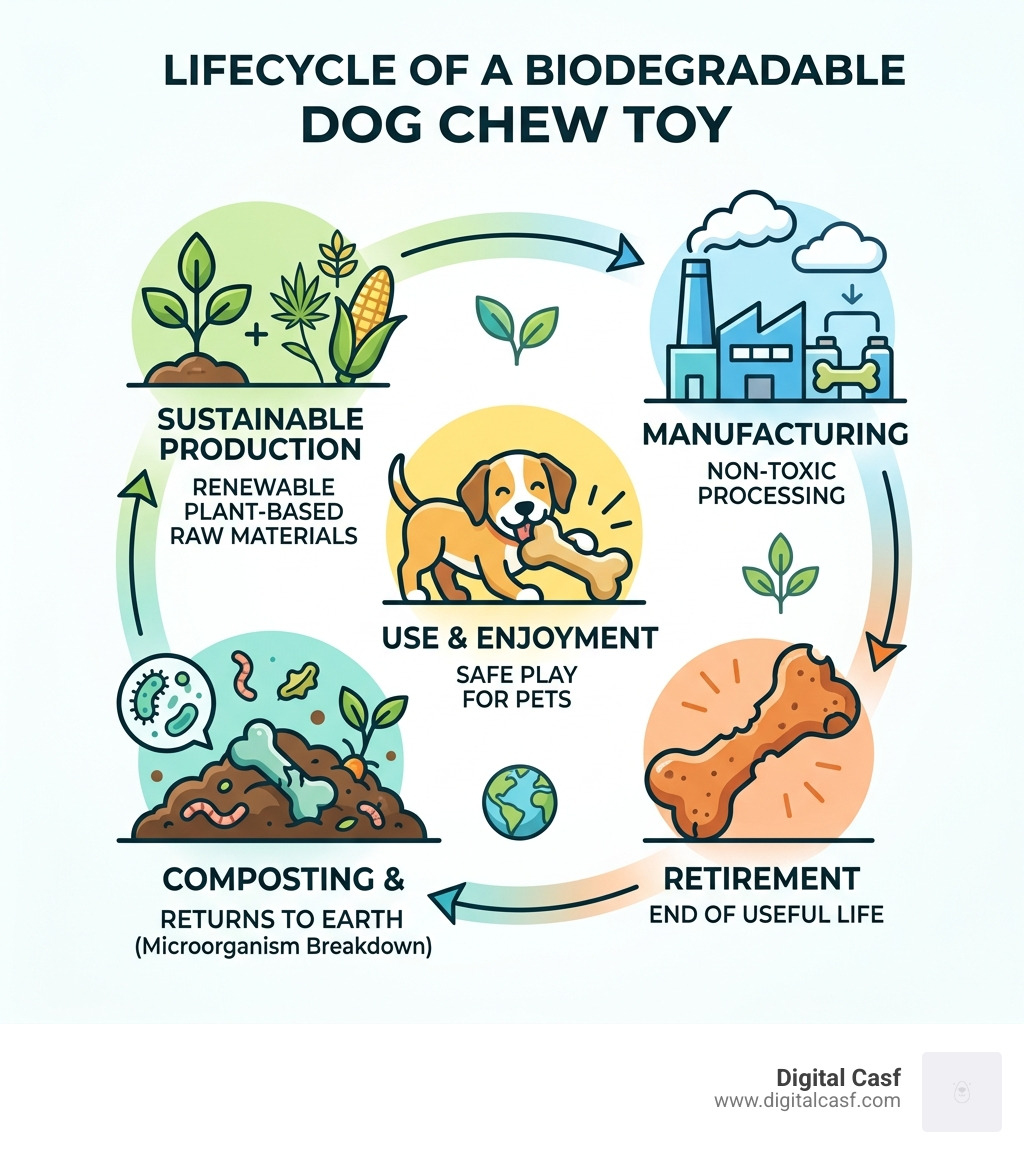
When we talk about biodegradable dog chew toys, we are referring to products designed to break down naturally through the action of microorganisms. Unlike traditional plastic toys that fragment into microscopic pollutants, these toys eventually return to the earth. The secret lies in the raw materials.
Cellulose
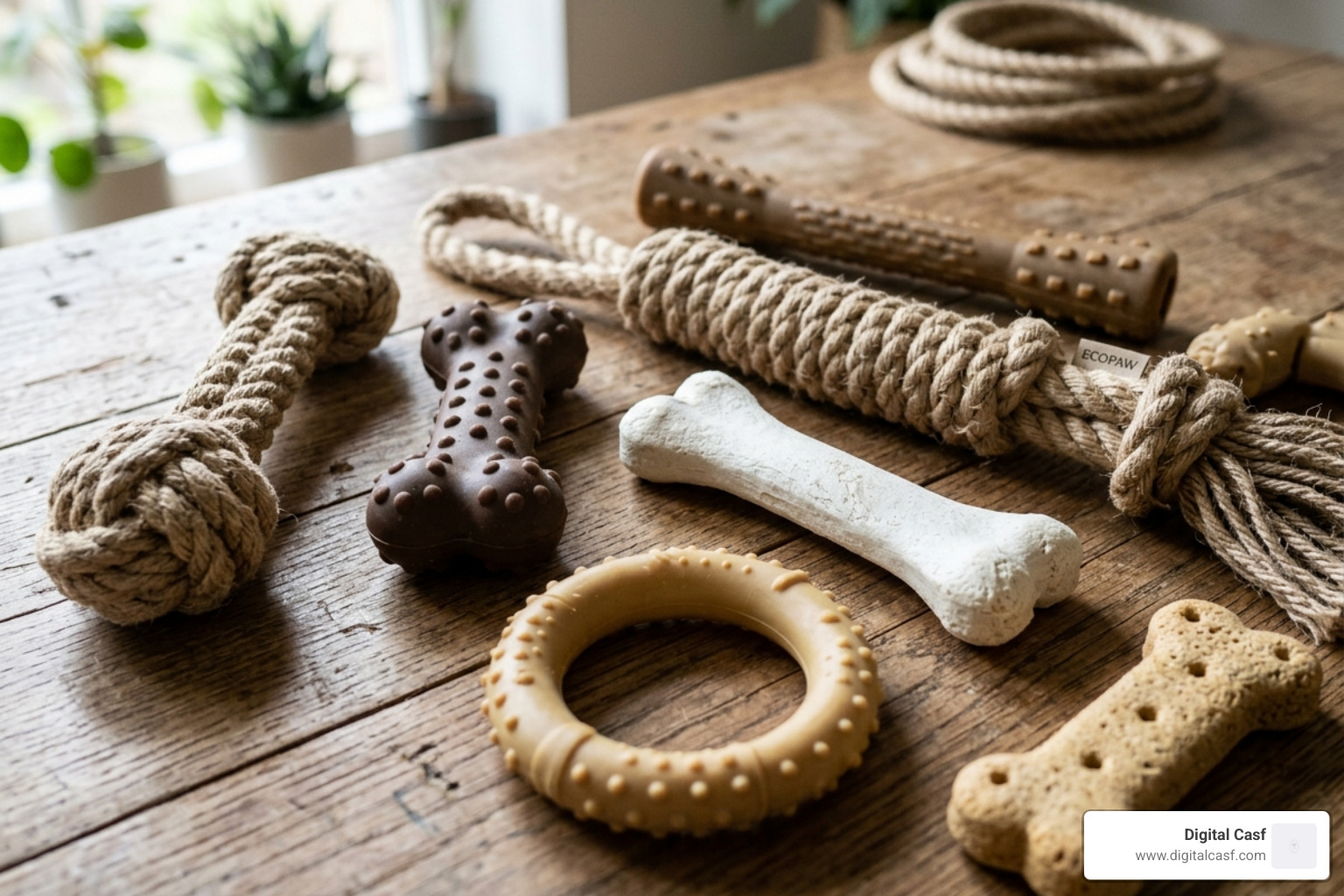
One of the most innovative materials in the pet industry today is cellulose. Often derived from wood pulp or stalks, cellulose is a complex carbohydrate found in the cell walls of plants. It is used to create hard, bone-like chews that are incredibly satisfying for dogs to gnaw on. Because it is a plant fiber, it is non-toxic and breaks down much faster than petroleum-based plastics.
Corn Starch and Plant-Derived Ingredients
Many modern eco-friendly chews utilize corn starch or other vegetable-based resins. These materials are often combined with cellulose to create a durable, bio-based “plastic” alternative. In fact, some high-quality plant-based chews are made of up to 95% plant-derived materials. These ingredients are often the same ones found in human foods like bread or hummus, making them a much friendlier option for a dog’s digestive system.
Hemp Fiber
Hemp is a superhero of the textile world. It requires very little water to grow, no pesticides, and produces a fiber that is naturally antimicrobial and incredibly strong. Hemp rope toys are excellent for tug-of-war and heavy chewing because the fibers are tough enough to scrub teeth but soft enough not to damage gums. Best of all, hemp is 100% biodegradable.
Natural Rubber
Not all rubber is created equal. While many “rubber” toys are actually synthetic blends of plastic and chemical additives, natural rubber is harvested from the sap of rubber trees. It is highly elastic, durable, and—most importantly—biodegradable over a long period. Natural rubber toys are often the go-to for “power chewers” who need something with a bit of “give.”
Organic Cotton
For softer play, organic cotton is the gold standard. Unlike conventional cotton, which is one of the most chemically intensive crops in the world, organic cotton is grown without synthetic fertilizers or toxic pesticides. A 100% organic cotton rope or plush toy is fully compostable at the end of its life, provided it doesn’t contain hidden plastic squeakers or polyester stuffing.
Why Your Pet Needs Biodegradable Dog Chew Toys
We believe that “Caring for Pets” and “Caring for the Planet” go hand-in-hand. Choosing biodegradable dog chew toys isn’t just an environmental statement; it’s a health-conscious decision for your furry friend.
- Pet Health: Dogs use their mouths to explore the world. When they chew on synthetic toys, they are essentially sucking on petroleum products. Biodegradable toys made from natural fibers or plants eliminate the risk of chemical leaching.
- Plastic-Free Play: By removing plastic from the equation, we reduce the amount of microplastics entering our homes and our dogs’ bodies.
- Sustainable Sourcing: These toys often support better farming practices, such as organic agriculture and the use of renewable resources like bamboo or corn, rather than relying on fossil fuels.
- Chemical Avoidance: Conventional toys often contain a “alphabet soup” of scary chemicals. Choosing natural materials ensures your dog isn’t exposed to unnecessary toxins during their daily play sessions.
How to Identify Genuine Biodegradable Dog Chew Toys
In a world of “greenwashing,” it can be tough to tell which toys are truly eco-friendly. Here is what we look for when vetting products:
- Transparent Labeling: Look for brands that list every ingredient. If a toy just says “man-made materials,” it’s likely a plastic blend.
- BPA-Free and Phthalate-Free: These are the two most common toxins found in plastic toys. A genuine eco-toy will proudly state it is free from these endocrine disruptors.
- Plant-Based Dyes: Brightly colored toys often use heavy-metal-based dyes. Look for toys colored with vegetable dyes or those that are undyed (like natural hemp or cotton).
- Certification Standards: Look for labels like “GOTS Certified” for organic cotton or “FSC Certified” for wood-based materials. Some toys also carry certifications for compostability (like ASTM D6400), though this is more common in packaging.
The Health and Environmental Benefits of Sustainable Play
The impact of switching to biodegradable dog chew toys is measurable. As we mentioned, nearly 70% of mass-produced toys contain microplastics. These particles are so small they can cross biological barriers, potentially causing inflammation or other health issues over time. By choosing plant-based or natural fiber options, you are directly reducing your dog’s toxic load.
From an environmental perspective, the benefits are even more staggering. Traditional plastic production is a massive driver of carbon emissions. However, shifting to plant-based materials can make a huge dent in that footprint. For example, some plant-derived dog bones have been shown to reduce CO2 emissions by up to 85% compared to traditional plastic toys.
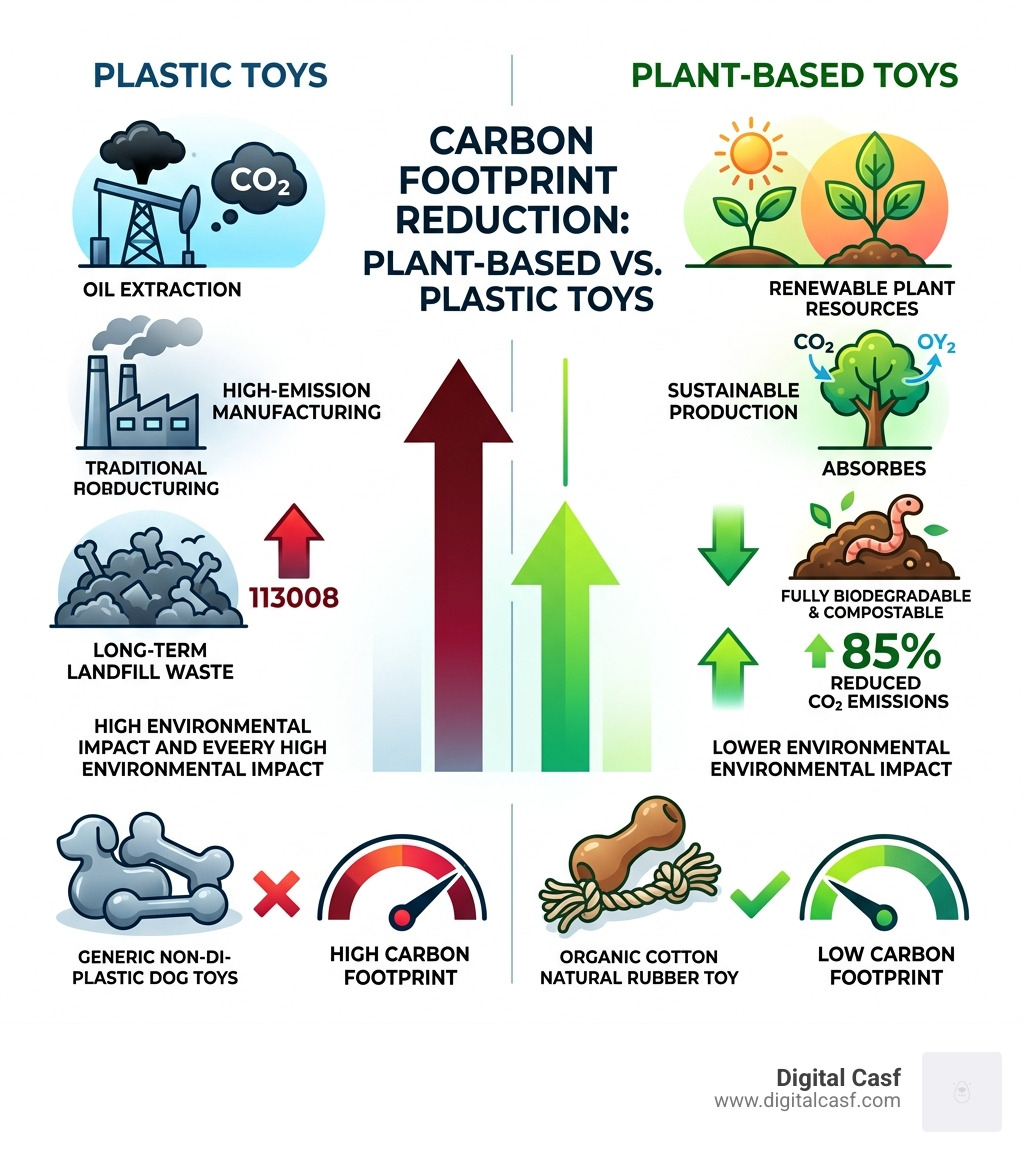
At Digital Casf, we are committed to helping pet parents navigate these choices. Every time you choose a compostable hemp rope over a nylon one, you are preventing a piece of plastic from sitting in a landfill for the next 400 years.
Safety and Ingestion: Are Plant-Based Chews Safe?
One of the most common questions we hear is: “What happens if my dog swallows a piece?”
With traditional nylon or plastic bones, swallowing a shard can be a medical emergency. Plastic is indigestible and often sharp, leading to potential intestinal blockages or internal lacerations.
Biodegradable dog chew toys made from plant-based materials like cellulose and corn starch are designed with safety in mind. While they aren’t meant to be a meal, they are generally non-toxic and hypoallergenic. When a dog gnaws on a high-quality plant-based bone, the material often “flakes” off in small, soft pieces rather than splintering into sharp shards. These small flakes are typically passed safely through the digestive tract.
| Feature | Plant-Based Chews | Conventional Nylon/Plastic |
|---|---|---|
| Material Origin | Renewable plants (Corn, Wood) | Petroleum/Fossil Fuels |
| Ingestion Risk | Low (Non-toxic, flakes off) | High (Sharp shards, indigestible) |
| Chemicals | BPA/Phthalate-Free | Often contains additives |
| Texture | Mimics wood or bone | Very hard, can fracture teeth |
| Environmental Impact | Biodegradable/Low Carbon | Permanent waste/High Carbon |
Many eco-friendly brands even offer “splinter-resistant” guarantees. For example, some natural rubber and plant-fiber bones are engineered to be 20% softer than nylon, making them much gentler on a dog’s gums and teeth while still providing a satisfying “crunch.”
Durability Guide: Natural Fibers vs. Conventional Alternatives
There is a common myth that “eco-friendly” means “wimpy.” In April 2026, we can confidently say that the technology has caught up with the demand.

Matching Toys to Chew Styles
To get the most out of biodegradable dog chew toys, you must match the material to your dog’s “chew-osophy”:
- Soft/Gentle Chewers: Organic cotton plush toys or light wool balls are perfect. These dogs enjoy carrying toys around or light nibbling.
- Average Chewers: Natural rubber shapes and recycled cotton ropes provide great resistance without being indestructible.
- Power Chewers: Look for dense hemp ropes or “hard” durability plant-based bones. Hemp is famously difficult to shred, and high-density cellulose bones can last for weeks or even months of heavy gnawing.
The 180-Day Benchmark
Some of the best biodegradable bones on the market, such as the Yomp Barkin’ Bone, are designed to be 180-day biodegradable. This means that under the right conditions (like a commercial compost pile), the toy will break down in about six months. In a home setting, it might take longer, but compared to the “forever” lifespan of plastic, it’s a massive win for the environment.
Frequently Asked Questions about Eco-Friendly Toys
Are biodegradable toys more expensive than plastic?
Initially, you might notice a slightly higher price tag on biodegradable dog chew toys. This is because high-quality natural materials like organic cotton and natural rubber cost more to produce than cheap, mass-market petroleum plastics.
However, we argue they offer better long-term value. Because they are often made with better construction (like dense hemp fibers or reinforced stitching), they can actually last longer than cheap plastic toys that shatter in minutes. Furthermore, you are saving on the “hidden costs” to your dog’s health and the future cost of environmental cleanup.
How should I dispose of these toys at the end of their life?
Don’t just toss them in the trash if you can avoid it!
- Composting: If the toy is 100% organic cotton, hemp, or wool (and you’ve removed any plastic tags), it can often go into a backyard compost bin.
- Closed-Loop Programs: Some brands, like West Paw, have “Take Back” programs where they grind down old toys to make new ones.
- Landfill: Even if a biodegradable toy ends up in a landfill, it is still a better choice than plastic. While landfills aren’t ideal for decomposition due to a lack of oxygen, these materials will still break down significantly faster than synthetic polymers.
Are these toys safe for aggressive chewers and puppies?
Yes, but supervision is key!
- For Puppies: Natural rubber is fantastic for teething as it provides a soothing “squish” that helps with gum pain.
- For Aggressive Chewers: Look for toys specifically labeled for “Power Chewers.” Avoid toys with stuffing or thin rope. Instead, opt for solid wool, dense hemp, or hard-durability plant-based bones. Many brands now offer a “chew strength guide” to help you pick the right density.
Conclusion
Switching to biodegradable dog chew toys is a small change that makes a big impact. By choosing materials like hemp, natural rubber, and plant-based cellulose, you are protecting your dog from microplastics and toxic chemicals while significantly reducing your household’s carbon pawprint.
At Digital Casf, we believe that every fetch session and every afternoon gnaw should be a step toward a cleaner planet. We invite you to explore more about our mission on our About Us page and join the growing community of eco-conscious pet parents.
Ready to upgrade your dog’s toy box? Visit our Homepage for the latest tips and sustainable product recommendations. Happy chomping!
